If you are planning a traditional Chinese wedding in Singapore, guo da li is one of the steps you will meet a few weeks before the day. It is also one of the parts of the wedding process that the previous generation talks about most and the current generation understands least. This is a calm modern guide to what it is, what it actually involves, and how couples navigate it now.
What guo da li is
Guo da li is the formal betrothal ceremony, traditionally held a few weeks to a month before the wedding day. The groom's family visits the bride's family bringing a set of symbolic gifts. The bride's family accepts the gifts, returns a portion of them, and the two families confirm the engagement.
The literal translation is something close to delivering the great gifts. The meaning is closer to the moment two families formally agree to become one.
It does not look like a wedding. There is no white gown, no banquet, no photographer in most cases. It is a small ceremony in a home, often lasting under an hour, with the matriarchs of both families running it.
What is in the gift set
A traditional guo da li set varies by dialect group, but the most common elements include the following.
- A pair of dragon and phoenix candles. Lit later during the wedding for blessing.
- Pairs of mandarin oranges. Symbolising abundance.
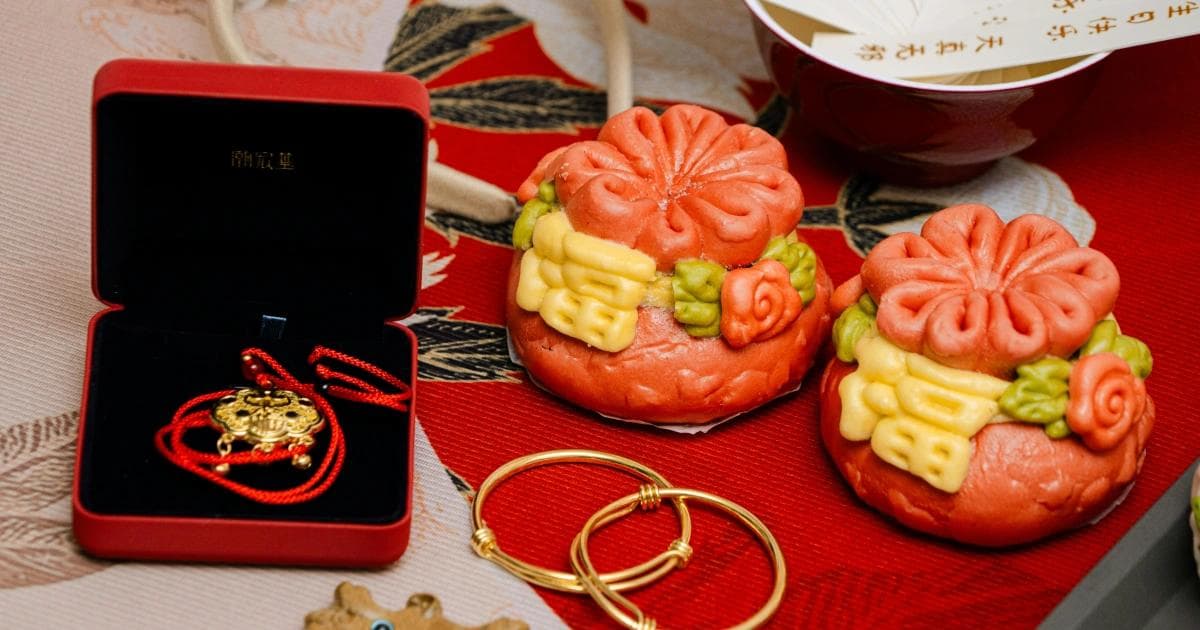
- Wedding cakes. Traditionally Chinese pastries, sometimes including pia and traditional biscuits, given in numbers that match the bride's family's request.
- Roast pig or a substitute. A symbol of prosperity. In modern weddings often replaced with a smaller offering or a token amount.
- Tea leaves, rice, and dried longan. Each carrying its own blessing.
- An ang bao known as pin jin or bride price. The amount varies enormously by family and dialect tradition.
- Jewellery. Often gold pieces for the bride, which she will wear at the wedding.
Bakeries that specialise in Chinese wedding pastries put together pre-arranged guo da li sets at most price points. Many couples buy one of these sets rather than assembling the items individually.
What the bride's family does
The bride's family receives the gifts and returns a portion of each, traditionally to symbolise that they do not take everything. The exact items returned vary by family, but commonly include some of the wedding cakes, half the mandarin oranges, and a small portion of the rice or longan.
The bride's family also presents a return gift set known as hui li. This is typically smaller in scale and includes items like a suit material or shirt for the groom, a belt, a wallet, and a small token return ang bao.
What modern couples actually do
The shape and scale of guo da li vary widely from family to family in Singapore today. Some families do the full traditional set with every symbolic item present. Others keep only the elements they consider most meaningful, based on a conversation between the two matriarchs. None is more correct than another. The right version is the one both families agree on.
The couple's role here is mostly to listen, not to direct. The matriarchs of both families will usually have a clear sense of what they would like to include, and a conversation between them, ideally well before the wedding date, settles most questions before they become tensions.
What to discuss before the day
Three conversations are worth having early.
- What does each family expect. Different dialect groups (Cantonese, Teochew, Hokkien, Hakka) have slightly different defaults. The groom's parents and the bride's parents should talk directly, ideally early in the engagement, rather than via the couple.
- What can be substituted or skipped. The roast pig in particular is increasingly substituted with a smaller offering or a token amount. Confirm in advance so nobody is surprised on the day.
- What the pin jin should be. This is the part of guo da li that causes the most discomfort to discuss but the most resentment when unspoken. A direct conversation, ideally between the two sets of parents, settles it. The amount itself matters less than the conversation having happened.
A note on the ceremony itself
Guo da li does not need to be a formal event. In modern Singapore, it often looks like the groom and a small entourage (usually the groom's parents and one or two siblings or aunts) arriving at the bride's home with the gift items, presenting them, drinking tea, exchanging the return gifts, and leaving. The whole thing can be done in forty-five minutes.
Some families take photos. Most do not. Some serve a light meal afterwards. Most simply talk for an hour.
Yes, we drive guo da li trips too
Most of our bookings are for the wedding day itself, but we will occasionally drive a groom's family for the guo da li visit. If you'd like a calm, presentable car for the morning, get in touch.
Tell us your datesWhat the items actually mean
Most couples do not need to know the symbolism in depth. The matriarchs running the ceremony know it, and that is enough. But a brief glossary helps the couple feel less lost.
- Dragon and phoenix candles. Masculine and feminine principles. Lit at the wedding to bless the union.
- Mandarin oranges. Sweetness, abundance, good fortune.
- Wedding cakes. Shared abundance. The bride's family distributes some to relatives as the formal announcement of the engagement.
- Roast pig. Historically a symbol of the bride's virtue. In modern weddings, present mostly out of respect for the tradition, not the original meaning.
- Tea and rice. Daily life, daily sustenance. The two families now share these.
- Pin jin. Originally a payment to the bride's family. Now more often a symbolic offering, with the amount agreed in advance between the families.
The meaning of each item is less important to most modern couples than the meaning of doing it at all. Two families sitting down in a living room, exchanging gifts, agreeing to become one. The pastries are a way to make that visible.
Closing
Guo da li is one of the smaller events of the wedding process and one of the more meaningful. It is also one of the few moments where the two sets of parents lead and the couple steps back. Let them. Ask them what they would like to include. Let the matriarchs run it. The couple's job, mostly, is to be present, drink the tea, and let the older generation feel the weight of a tradition being passed forward.