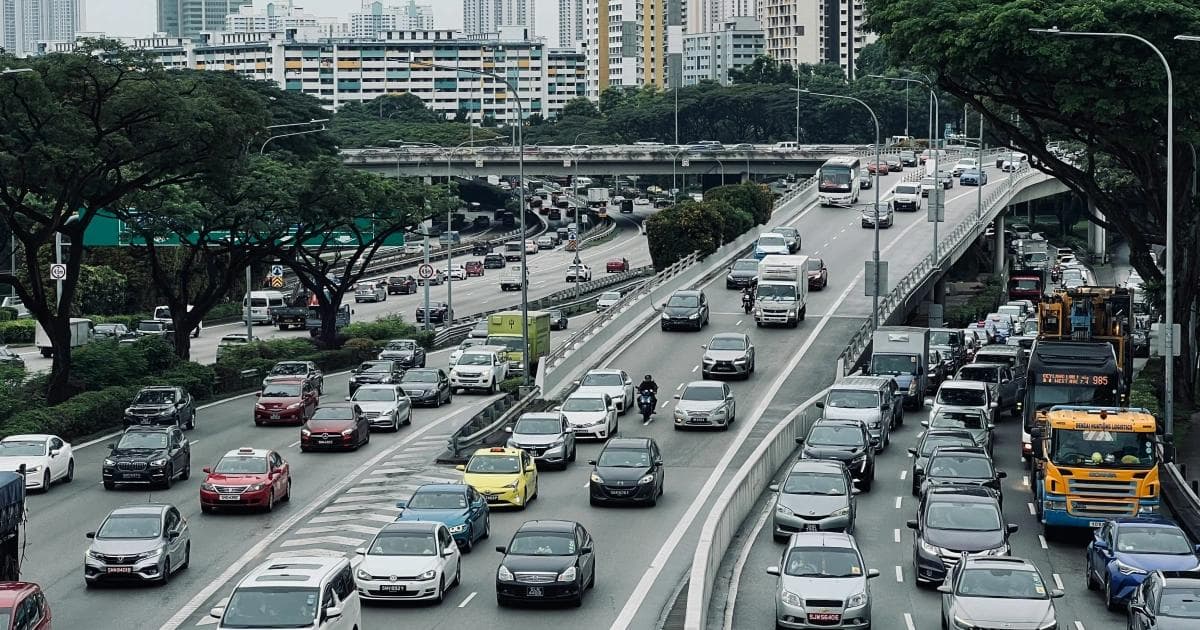
Singapore's traffic is mostly fine. A few specific hours and a few specific stretches of road, on a few specific days, are not. A wedding day that ignores the difference can lose a quarter of an hour where it least has it to spare. This piece is the short, practical traffic note we wish every couple had two weeks before the day.
Why wedding traffic is different from regular traffic
Three reasons it bites harder.
The first is that a wedding day uses the road during the worst windows. A traditional Singapore morning convoy is moving between 8 and 10 am, which is one of the heavier peaks. The evening transfer to the banquet runs between 4 and 6 pm, the other.
The second is that a convoy is slower than a single car. Three or four vehicles trying to stay together at lane changes and traffic-light cycles will move at the pace of the slowest, and will lose each other on the wrong junction more often than couples expect. Build in at least ten extra minutes for any cross-island convoy compared to a solo drive.
The third is that the consequences of being late on a wedding day are larger than on any other. A delayed photographer at the hotel cascades into the cocktail reception. A late tea ceremony pushes lunch. A missed slot at a ROM venue cannot be rebooked on the same day.
The hours that are most expensive
A short list of windows worth knowing.
- 7:30 to 9:30 am, weekdays. The school-run and CBD-bound peak. Add fifteen minutes to any cross-island morning leg.
- 11:30 am to 1:30 pm, daily. Lunch shuttle. Particularly bad around the financial district, Orchard, and the hotel clusters.
- 4:30 to 7 pm, weekdays. The evening peak. Banquet arrivals timed for 6 pm need to allow extra travel buffer.
- Saturday afternoons. A separate pattern. Heavy mall and family traffic around the central malls and the Botanic Gardens. Less predictable than weekday peaks.
- Sunday late afternoons. Returning-from-Malaysia traffic from the Woodlands and Tuas checkpoints. Affects northbound and westbound routes.
If your wedding day touches any of these windows, the answer is rarely to reroute. It is to leave earlier.
The routes worth flagging
Most cross-island wedding journeys use one of three corridors. Each has a quirk worth knowing.
- East Coast Parkway (ECP). The fastest east-west route most days. Slows considerably during morning peak between the Changi end and the Marina South exits. A wedding arriving from the east at a CBD hotel for a 6 pm banquet should be on the road by 4:30 at the latest.
- Ayer Rajah Expressway (AYE) and West Coast Highway. The western corridor. Reliable most of the day, but the stretch between Pasir Panjang and the Marina Boulevard exits can stall during evening peak. Sentosa-bound convoys leaving the west of the island after 4 pm should allow extra buffer.
- Pan Island Expressway (PIE). The diagonal across the island. Most weddings will use part of it. The slowest stretches are typically the Jurong East to Bukit Timah segment in morning peak and the Eunos to Paya Lebar segment in evening peak.
Wedding cars heading to or from Sentosa specifically should also factor the Sentosa Gateway approach. Our earlier piece on Sentosa weddings covers the island-side logistics in more detail.
Specific events that close roads
Three annual events reliably close central roads and need to be checked against the wedding date.
- Singapore Grand Prix (typically late September or early October). Closes large portions of the Marina Bay area, the city circuit, and adjacent roads for several days around the race weekend. Any wedding within two kilometres of the Marina Bay precinct during the closure window needs route confirmation with the venue and a serious buffer.
- National Day Parade and rehearsals (late July through 9 August). Closes parts of the central area on rehearsal weekends and the day itself. The Padang, Marina Bay, and surrounding roads are affected.
- Standard Chartered Singapore Marathon (typically early December). Closes a large city-route on race morning. Most wedding mornings will be over before the worst of the closure ends, but the start window overlaps with morning gate crashes for couples in the east and central areas.
The Land Transport Authority publishes closure maps and timing for each. Check at least a fortnight before the wedding if any of these dates are close to yours.
A few quieter route quirks
- Bukit Timah Road through the school cluster, weekday mornings. Backs up between 7:15 and 8:30 am on school days. A morning convoy passing through here should leave fifteen minutes earlier than Google Maps suggests.
- Holland Road and the Holland Village area, weekend lunches. Heavy local traffic. A wedding lunch hosted at one of the restaurants here should plan for a slow approach.
- Orchard Road, Saturday evenings. Slower than expected, especially around Ngee Ann City and the Wisma area. Wedding cars are often better routed via Scotts Road or River Valley to avoid the worst of it.
The buffer rule
A simple discipline that absorbs most of the above: add fifteen minutes to every cross-island wedding journey, on top of whatever Google Maps suggests, regardless of time of day. The buffer is invisible on the run sheet. It absorbs the small delays that always happen. A convoy that arrives ten minutes early has a calmer entry. A convoy that arrives ten minutes late has a worse photo set, a stressed photographer, and a guest list with cocktails getting warm.
We plan the routes the week before
When you book us, we drive the morning's intended route during the same window on a weekday before the wedding. The traffic patterns we see inform the timing recommendations we send back. It is the quietest part of our service.
Get in touchWhen to trust the traffic and when to leave early
A practical decision rule. If your wedding day touches any peak window, any of the three annual events above, or a cross-island leg longer than fifteen kilometres, leave fifteen minutes earlier than the run sheet suggests. If none of those apply, the run sheet timing is usually safe.
Couples often resist leaving early because of fear of arriving before the venue is ready. The answer is to plan a calm holding location for the car near the venue. A coffee shop, a side street, the venue's own short-stay bay. Arriving early and waiting is the smallest cost on the day. Arriving late is one of the largest.
Closing
Singapore is small. Most wedding journeys are short. The traffic that catches couples out is rarely about distance. It is about the wrong hour, the wrong stretch, or the wrong day. Build in the buffer. Check the closure maps. Leave earlier than feels comfortable. The first photo of the day is taken at the venue, not in the back of a car stuck on the PIE.