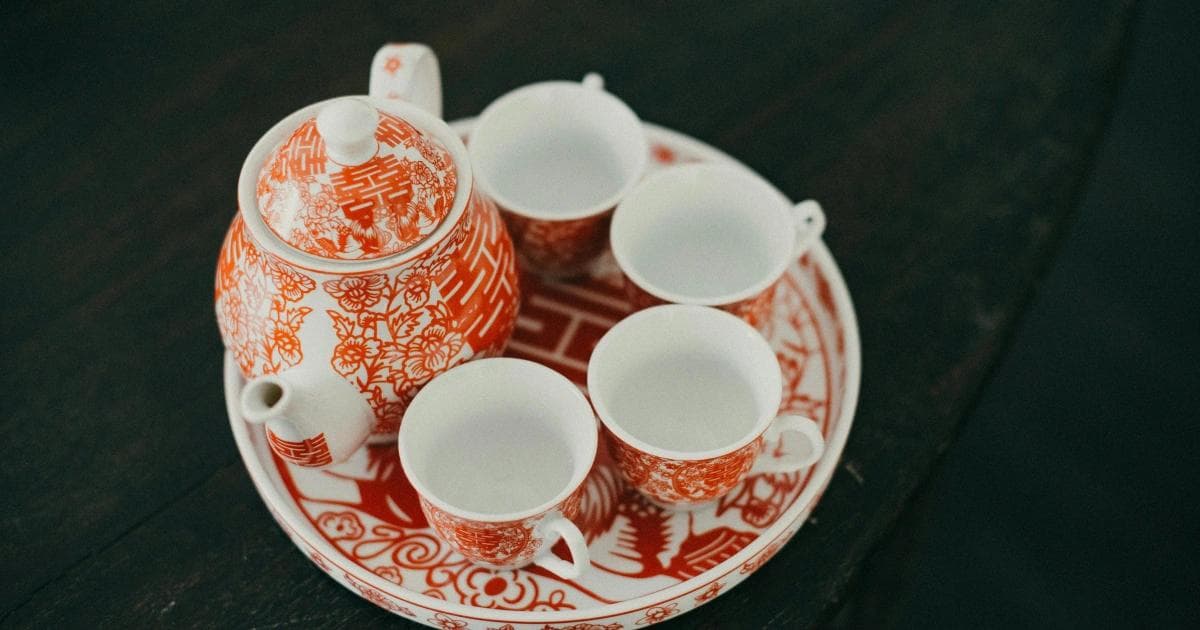
The tea ceremony is one of the smallest events of the wedding day. It also carries more weight than almost any other part. For families with shared traditions, it runs itself. For couples whose families do things differently, the planning needs more care than the ceremony itself takes. This is for couples in that second group.
Why this comes up more than you might think
Most Singaporean weddings now bring together families with at least one variation in tradition. A Teochew bride and a Cantonese groom. A Chinese family and a Eurasian one. A Singaporean Chinese groom and a bride whose family migrated a generation ago. Even within the same dialect group, the order of serving, the choice of sweets in the tea, and the protocol around angbao return can vary house to house.
Couples often discover these differences for the first time two weeks before the wedding, when their parents start sending each other voice notes about what is correct. The right response is not to choose between traditions. It is to plan both with intention.
Where families most often differ
The variations tend to cluster in five areas.
- Order of serving. Some families serve grandparents first, then parents, then elder uncles and aunts. Others serve parents first, then grandparents, then elders. Both are correct within their own tradition.
- What goes in the tea. Red dates, lotus seeds, longan, dried persimmon. Different families use different combinations. Some add nothing at all.
- The kneeling question. Some families expect the bride and groom to kneel on cushions for the tea pour. Others stand. Some only kneel for grandparents.
- The angbao return. The elders traditionally give an angbao or piece of gold jewellery in return. The denomination and what counts as "appropriate" varies widely between families.
- Who is present. Some families want only immediate elders. Others bring extended family. The room size and the morning timing depend on this.
None of these are right or wrong. They are simply different defaults.
The framework that works
The cleanest path is almost always do both ceremonies, each in its own family's tradition. Most morning wedding timelines already accommodate this. The tea ceremony at the bride's home runs in the bride's family's order, with the bride's family's tea ingredients, with the bride's family's expectations. The ceremony at the groom's home runs in his family's order.
This sounds obvious. It is surprisingly rarely the default. Couples often default to one tradition because one set of parents is more vocal, then quietly upset the other side. Two ceremonies done in their own traditions, on the other hand, leaves both families feeling honoured. The bride and groom drink more tea than they would prefer, which is a small price.
When you cannot do both
Occasionally you only have one tea ceremony in the plan. Perhaps the groom's family lives overseas, perhaps both sides are gathering at the hotel, perhaps it has been folded into the lunch reception. In that case, three principles help.
- Use the older generation's tradition as the anchor. It will mean more to them and seem charming to the younger guests.
- Ask both sets of parents in advance, in writing. A single WhatsApp message to both sets of in-laws saying "here is the order we are planning, please tell us if anything needs adjusting" is worth more than any wedding planner.
- Have a family member act as the master of ceremonies. Usually an elder cousin or an aunt who knows both sides. They will quietly guide the order and gently re-route mistakes before they become awkward.
We'll plan the morning around the tea ceremony, not the other way around.
When you book with us, we'll build the morning timing around how long the tea ceremony actually takes at your families' pace. Tea ceremonies almost always run longer than the wedding planner's template suggests.
Get in touchA small story
A morning we drove a few months back ran twenty minutes long. The bride's family was Cantonese, the groom's was Teochew, and the couple had chosen to keep both family traditions in full — the order of serving, the tea ingredients, the elders involved. The convoy still reached the hotel on time. The bride mentioned in the back of the car between the two homes that the morning had felt like the part of the day she was proudest of.
Practical timing
If you are doing two tea ceremonies in one morning, build for it. A single ceremony at one home runs 20 to 30 minutes. Two ceremonies, with travel between, runs closer to 75 minutes including the drive and the buffer for elders settling in. Our piece on the wedding morning timeline covers how this fits into the larger day. Our companion piece on what we do beyond driving during the tea ceremony covers the smaller role we play in keeping it moving.
Closing
A tea ceremony done well is not about getting the protocol perfect. It is about both families feeling that their tradition has been honoured by the people now joining them. Two ceremonies in their own styles will do that more reliably than one careful compromise. The couple drinks a lot of tea. Everyone goes home feeling seen.