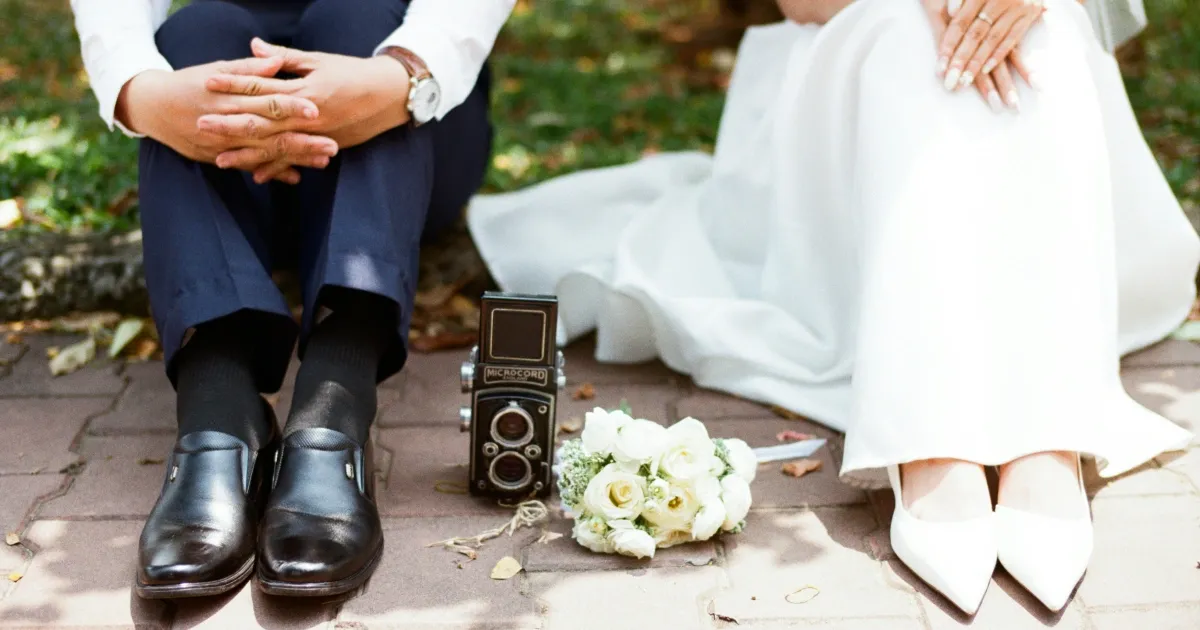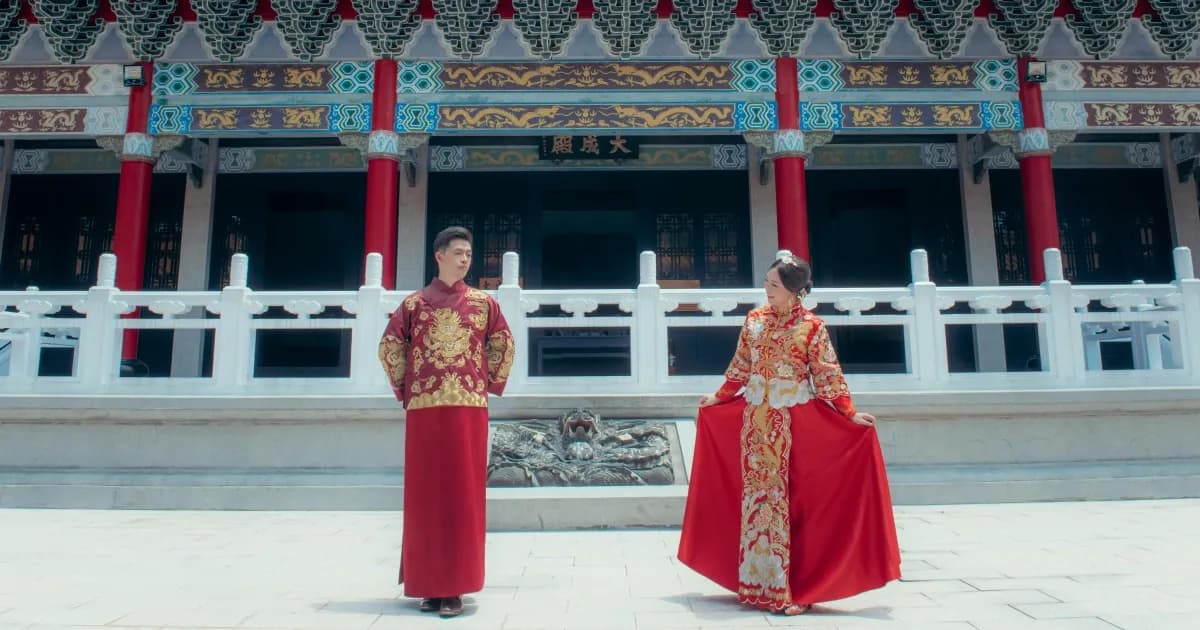
A common pattern in Singapore weddings. One family carries a detailed body of wedding customs — a Chinese family with tea ceremonies, gate crashes, guo da li, hair combing. The other family does not. Sometimes the other side is from a culture with its own different customs. Sometimes the other side simply does not have a strong wedding tradition at all. The couple is left to navigate the asymmetry.
This piece is the calm guide for that situation. It pairs with our piece on tea ceremony when two families do it differently, which covers the case where both families have traditions that diverge.
The asymmetry
When one family carries customs and the other does not, the planning conversation tilts in one direction by default. The family with traditions has more to organise, more to spend on, and more emotional weight tied to specific elements of the day. The family without traditions has, in effect, fewer veto points. The wedding can quietly drift toward being the first family's wedding, with the other family as politely present guests.
This is not always a problem. Sometimes the family without traditions is genuinely happy to be in a supporting role. Sometimes the lack of tradition is liberating, leaving space for the wedding to lean into the other family's customs without compromise. But often the asymmetry is uncomfortable in ways nobody names directly.
The first step in any cross-cultural wedding planning conversation is naming the asymmetry out loud, between the couple, and then between the couple and both sets of parents.
The four common configurations
The pattern shows up in different shapes.
- A traditional Chinese family marrying into a less traditional Chinese family. Common in modern Singapore. One side keeps tea ceremonies, gate crashes, hair combing. The other side has let most of these fade over the past two generations.
- A traditional Chinese family marrying into a family from a different Asian background. Indian, Malay, Eurasian, Japanese, Korean, Filipino. The other family often has its own wedding customs but a different shape. The challenge is fitting both into one day.
- A traditional family marrying into a Western or international family. Often the most asymmetric. The Western family may have no specific wedding customs beyond an aisle walk and a reception. The traditional family carries everything.
- A family with religious wedding traditions marrying into a secular family. Christian, Muslim, Hindu, Buddhist customs on one side. Civil expectations on the other.
Each shape calls for slightly different choices. The principles are the same.
The principles
Three habits that consistently help cross-cultural planning.
- Decide which traditions are essential to which side, and which are flexible. Each set of parents will have one or two non-negotiables and several others they would prefer but would let go. Identifying the non-negotiables early settles most of the planning.
- Use the day's existing structure rather than inventing a new one. A Singapore wedding day has natural slots — morning, mid-morning, lunch, afternoon, evening. Each can carry a tradition. Distribute rather than try to merge.
- Hold the wedding's centre of gravity wherever the heaviest traditions sit. If one family carries the bulk of the customs, the wedding tends to feel more cohesive when those customs are given the primary structural slots, with the other family's contributions woven in around them.
What works practically
A few specific moves that consistently work.
- Give the family with traditions the morning. Tea ceremonies, gate crash, hair combing. Most Chinese wedding customs naturally live in the morning. Letting them have that window without compression is a gift to the parents.
- Use the lunch reception as the meeting ground. A lunch reception with both families is the moment where the day's halves come together. Build it to be welcoming to both. Avoid leaning too heavily into either family's signature style here.
- Reserve the banquet for whichever side hosts it. If the banquet is at a hotel hosted by the family with traditions, the programme can reflect their customs. If hosted by the family without, the programme can be lighter.
- Brief the emcee carefully on cross-cultural cues. A bilingual or culturally aware emcee can subtly translate moments for guests who would otherwise miss the significance.
- Send a short cultural primer to guests. A few lines on the invitation card or RSVP message explaining what to expect, particularly for elements the other side's guests may not have seen before. Brief is better than detailed.
What does not work
A few patterns that consistently cause friction.
- Compressing one side's traditions to make time for the other. Cutting the tea ceremony from forty minutes to fifteen to accommodate a Western reception structure usually leaves one set of parents feeling shortchanged. Better to keep both fully and lengthen the day.
- Asking the family without traditions to invent rituals. Pressing one side to come up with their own version of a tea ceremony rarely lands. The traditions either exist organically or they do not.
- Letting one side's parents dictate the other side's contribution. A bride's mother who tries to advise the groom's parents on how their side should be involved usually creates more tension than the wedding can absorb.
- Hiding the asymmetry from guests. Pretending the day is symmetric when it is not produces a programme that feels confused. Better to lean into whichever side carries the day's structural weight and let the guests understand.
The conversation with parents
The hardest part of cross-cultural planning is usually not the customs themselves. It is the conversations about them. A short framework that helps.
- Each parent speaks to their own child first. Before the four parents meet, each side has the conversation about their own non-negotiables with the bride or groom from that family.
- The couple aligns between themselves. With both lists in hand, the couple reconciles privately. This is the most important conversation of the planning process.
- The couple presents the alignment to both sets of parents, together if possible. Not as a final decision, but as a draft. "This is what we are thinking. Tell us where it does not work."
- Revisions happen over weeks, not in a single sitting. Cross-cultural wedding planning rarely closes in one conversation. Expect three or four rounds.
We adapt the day around your structure
Whatever shape your wedding day takes, we'll build the morning's transport plan around it. A cross-cultural day often has more transitions and tighter timing. The calmer the chauffeur, the calmer the convoy.
Tell us your dayA small note on language
For weddings that bring together families who speak different languages at home, a few small interventions help guests feel included.
- A bilingual emcee, even if the room is mostly one language.
- Translations of the order of service printed on a small card at each table.
- A bride or groom who, where possible, addresses the other family briefly in their language during the speech. Even a single sentence lands warmly.
Closing
Cross-cultural weddings are often described, by the couples who have them, as the most rewarding to plan and the most emotionally complete to live through. The asymmetry is real. The asymmetry is also part of what makes the wedding's story specific to you. Plan it with both families' eyes on the design from the beginning. Hold the conversations early. Let the heavier-tradition side keep its structural weight. Let the lighter side contribute where it genuinely wants to. The day will reflect the new family you are building.